
Why we ran this test
Ro has a lot going for it on paper. It is one of the bigger names in telehealth weight loss, it gets you in front of a prescriber fast, and the first month runs about $40, which is about as low a barrier as this category gets. For anyone who just wants a prescription without a long wait, I understand the appeal.
Then I started looking closer at HumeCare+. There is no listed price anywhere on the site. Cost depends on what a free assessment recommends, which felt like a dodge until I saw what that assessment actually leads to: the GLP-1 medication plus glycine, B12, and B6 to protect muscle and ease side effects, weekly 3D body scans that track fat and muscle instead of just weight, and a clinician you can reach any time instead of only at scheduled check-ins. I wanted to know whether that fuller protocol was worth going in blind on price, or whether Ro's cheaper, faster path already covers what most people need.
So I put both programs side by side: what is actually included in the price, how each one handles the muscle loss that comes with rapid weight loss, how much contact you get with a real clinician, and what happens to the total cost once medication enters the picture. Here is what I found.
At a glance: HumeCare+ vs. Ro
Both protocols side by side before I get into the details.
| Spec | HumeCare+ | Ro |
|---|---|---|
| Price | Personalized after a free assessment | ~$40 first month |
| Billing Structure | One protocol price, medication included | $145-149/mo membership, medication billed separately |
| Fat Loss | 60% higher than standard GLP-1 programs | In line with a standard GLP-1 program |
| Muscle Preserved | 80% more preserved | Not tracked; standard programs see up to 50% loss |
| Metabolic Age | Trends toward reversing | Not tracked |
| Body Composition Tracking | Weekly 3D scan, fat and muscle tracked separately | Connected scale, weight only |
| Best For | Lasting fat loss with muscle preserved | Starting fast on a familiar brand |
| Guarantee | 90-day results guarantee, eligibility and adherence conditions apply | No published results guarantee found |
| Support Model | Unlimited clinician access, 24/7 | RN/coach model, scheduled check-ins |
Green marks the better pick in each row.
Reason 1: HumeCare+ Sees What's Actually Changing in Your Body
This is the piece that changed my mind the most. Almost every GLP-1 program tracks one number: what the scale says. That number does not tell you if you are losing fat or losing muscle, and on a GLP-1 you can lose plenty of both. I looked at what each program actually measures while you are on the medication, not just at the start.

Every HumeCare+ member gets a Hume Body Pod smart scale, free ($352 value). Step on it at home and it tracks body fat, muscle mass, visceral fat and 50+ body-composition metrics, so you can see whether the weight coming off is fat or muscle.
- A weekly 3D body-composition scan that separates fat loss from muscle loss, so you can see which one is actually moving
- HumeCare says its members preserve 80% more muscle than what's typical on a standard GLP-1 program, based on its internal comparison data
- The same comparison shows 60% higher fat loss than standard programs over the course of the protocol
- Metabolic age is tracked and trends toward reversing, not just a side effect of a lower number on the scale
- The scan turns "I'm losing weight" into a picture of what's actually changing, so the plan can adjust before muscle loss gets out of hand

- A connected smart scale and app that log body weight, and only body weight
- No fat-versus-muscle breakdown anywhere in the program that I could find
- Members find out they are losing muscle the way anyone does without a scan: clothes fitting differently, or strength dropping in the gym
- The scale is a genuine convenience since it syncs automatically, but convenience is not the same as insight
- For a program built around a drug that is well known to reduce muscle mass, the lack of any composition tracking is a real gap
A scale tells you a number went down. It does not tell you what came off. HumeCare+'s weekly scan is the difference between guessing and knowing, and the muscle-preservation numbers back it up. Ro's smart scale is convenient and syncs well, but weight alone was never going to be enough to judge a GLP-1 program by. If body composition matters to you as much as the number on the scale, this section settles it.
Reason 2: HumeCare+ Builds a Full Protocol, Not Just a Prescription
Both programs get you a prescription. That part is easy now; half a dozen telehealth companies can do it. The difference shows up in what comes with the prescription, or what does not.

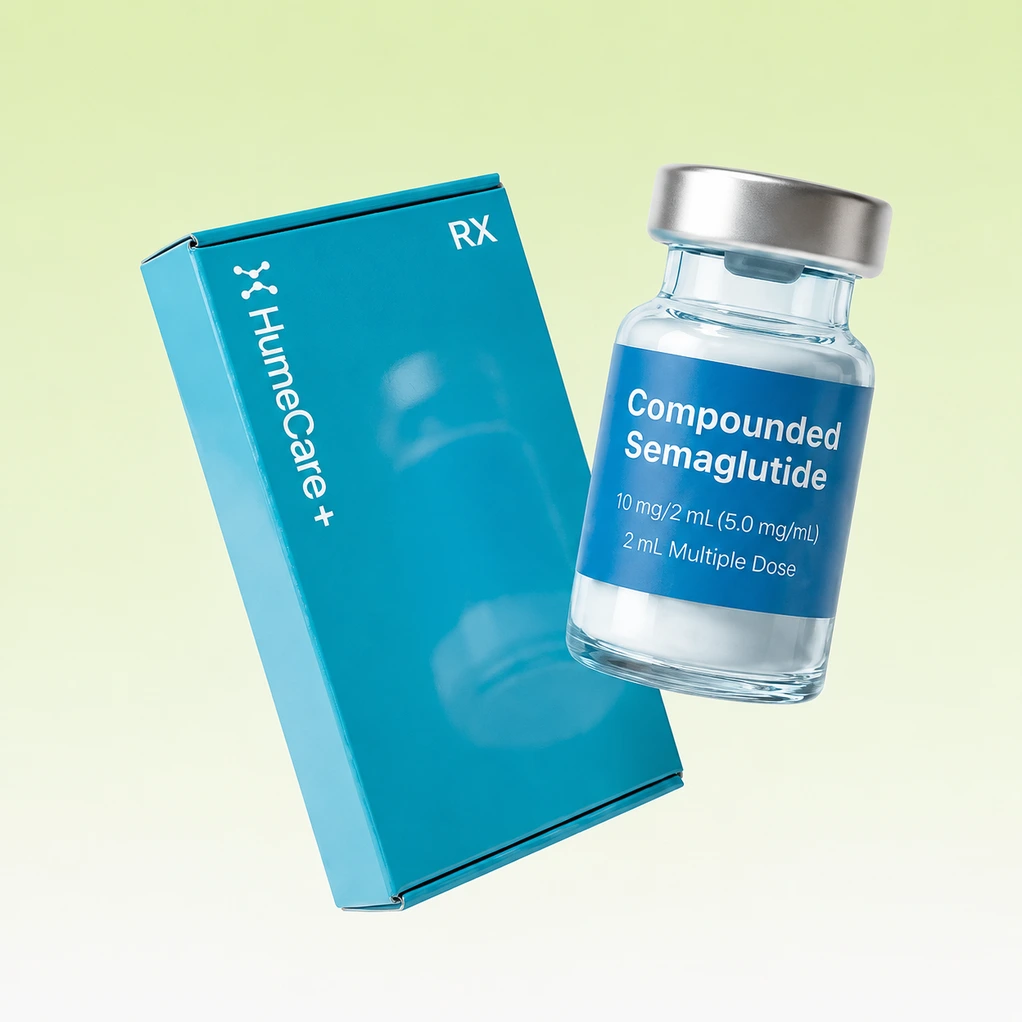
- Physician-prescribed GLP-1 medication, plus glycine, B12, and B6 built into every dose
- The added glycine and B vitamins are there specifically to protect muscle and take the edge off common GLP-1 side effects like nausea and fatigue
- A daily plan in the app pairs the medication with food logging, so the protocol is not just a prescription sitting in a drawer
- Dosage is calibrated to your body type and your data, not a flat starting dose everyone gets
- The weekly body scan feeds back into the plan, so the protocol adjusts as your body changes
- A physician consult and a prescription for a brand-name GLP-1: Wegovy, Zepbound, or sometimes Ozempic off-label
- Multiple medication options under one program, a genuine advantage if a drug does not agree with you
- No glycine, B12, or B6 support built into the program that I could find, just the medication itself
- RN and health-coach support is available, but it sits alongside the prescription rather than being built into it
- Membership and medication are billed and managed separately, so the medication is the whole program rather than one part of a larger plan
Ro will get you a prescription quickly, and having a choice of medications is a real plus if one drug does not agree with you. But a prescription by itself does not address the side effects or the muscle loss that come with it. HumeCare+ treats the medication as one piece of a protocol built to handle both. If you already know exactly which drug you want and nothing else, Ro gets out of your way fast. If you want the parts around the medication handled too, HumeCare+ is doing more with the same starting point.
Reason 3: HumeCare+ Keeps a Clinician in Your Corner, Not Just an App
A weight-loss protocol is not something you check in on once a month and forget. Questions come up at random times: a side effect late at night, a dosing question before a dose is due, a plateau that makes you want to quit. I looked at who actually answers when that happens.
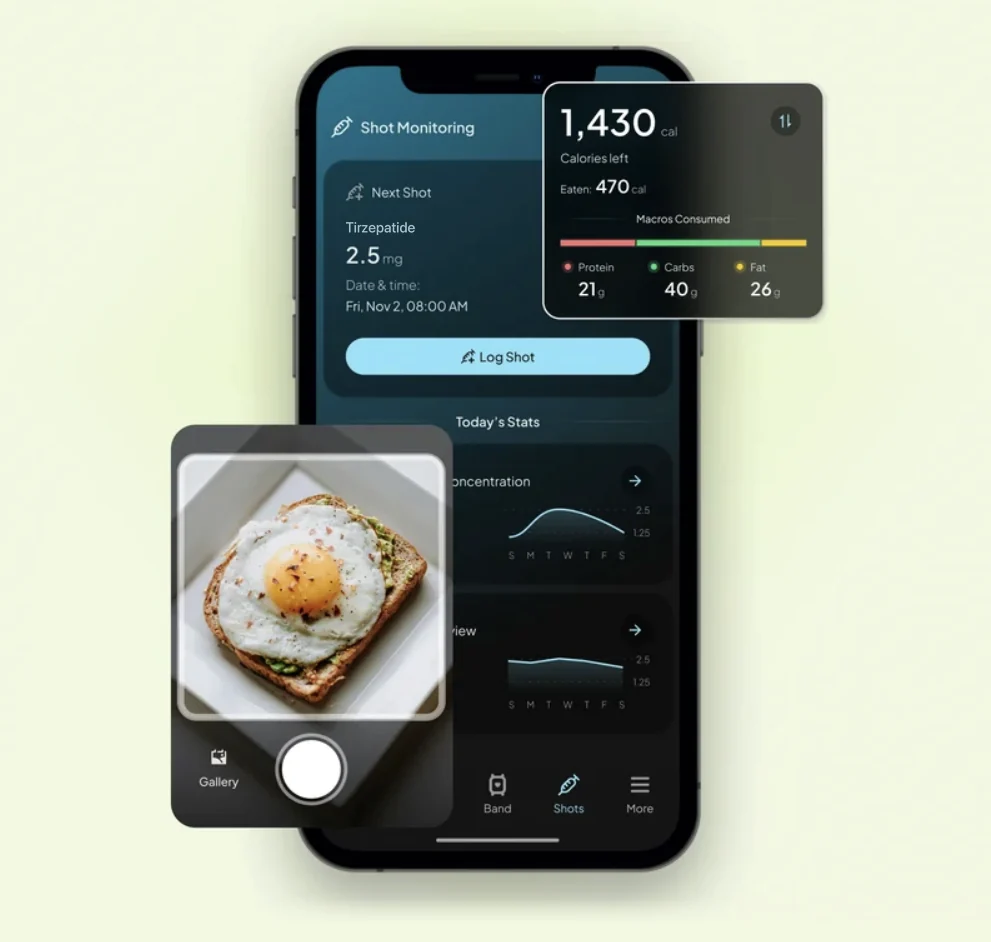
- Unlimited access to clinicians 24/7, not scheduled slots you have to wait for
- A dedicated US clinician on your team who already knows your history, rather than a rotating queue
- The app keeps medication tracking and food logging in one place, so your clinician sees the same picture you do
- Regulated by the General Pharmaceutical Council, the Care Quality Commission, and the MHRA
- Support is built to catch a problem the week it happens, not at the next scheduled visit
- RN and health-coach support, plus scheduled video provider visits, a fair amount of access on paper
- Fast virtual access to a prescriber is one of Ro's real strengths, especially if you just want to get started quickly
- Visits are scheduled rather than on-demand, so an urgent question can mean waiting for the next opening
- Lab testing is included as part of getting started, run through a standard clinical lab network
- Ongoing support leans more on the app and coaching messages between visits than on reaching a clinician directly
Ro is not hands-off. Scheduled video visits are more contact than plenty of programs offer, and lab work is built into the process. But scheduled check-ins are not the same as being able to reach someone when a side effect hits at a bad time. HumeCare+'s 24/7 clinician access is built for exactly those moments. If you mostly want a program that runs quietly in the background, Ro's structure works fine. If you want to reach an actual person when something feels off, HumeCare+ is set up for that.
Reason 4: HumeCare+ Is Built for the Long Haul
Weight loss on a GLP-1 is not a straight line, and a program that pretends otherwise sets people up to quit around month two. I wanted to know whether either program actually tells you what to expect month by month, or whether you are left guessing.
- A mapped-out timeline: 5 to 10% of bodyweight lost in months 0 to 3, while the medication effect builds and the dose increases gradually
- 10 to 20% by months 3 to 6, once your optimal dosage is found and side-effect chances start dropping as your body adjusts
- Lasting loss from month 6 through 12 and beyond, with the medication easing hunger and cravings while you build habits that keep the weight off
- Members lost an average of 21.5% of body weight over 10 months, based on an internal company analysis of 6,846 HumeCare+ members (individual results vary)
- The pacing is explained upfront, so a slow first month reads as normal instead of a sign the protocol is not working
- A membership built around getting you started fast rather than mapping out a multi-month timeline
- The low first-month price makes it easy to start without committing to a long-term plan right away
- Ro is upfront that the program is virtual and self-directed, which suits people who do not want a lot of structure
- I could not find a published average weight-loss figure or timeline for Ro's own members
- Without a stated pacing model, it is harder to know if a slow week is normal or a reason to worry
The number that stuck with me is 21.5%, the average body weight HumeCare says its members lose over 10 months, because it comes with a real timeline attached: slower at first, faster in the middle, then focused on keeping it off. That kind of pacing tells you what a normal month is supposed to look like. Ro gets you started faster and cheaper up front, but I could not find the same long-range picture from them. If you want a program that tells you what month six should look like, HumeCare+ gives you that. If you just want the prescription moving quickly, Ro handles that part well.
Reason 5: HumeCare+ Protects Muscle While You Lose Fat
This is the risk nobody mentions when they talk about how well GLP-1s work. Rapid weight loss without support can take muscle right along with fat, and losing muscle does more than change how you look. It slows your metabolism down. I looked at what each program actually does about it.
- Glycine, B12, and B6 are built into the medication protocol specifically to protect muscle during weight loss
- HumeCare reports 80% more muscle preserved compared to what's typical on a standard GLP-1 program
- Metabolic age trends toward reversing on the protocol, instead of climbing the way it can with muscle loss
- The weekly body scan tracks muscle directly, so preservation is measured, not assumed
- Fat loss itself runs 60% higher than standard programs, per HumeCare's own comparison data, so the protocol is not trading fat loss for muscle protection
- The prescription addresses fat loss, which is what most people sign up for in the first place
- Nothing in the program is specifically built to protect muscle while you lose weight
- Standard GLP-1 use without added support commonly sees muscle loss as high as 50% of total weight lost
- No body-composition tracking means muscle loss would likely go unnoticed until strength or energy drops
- For someone who only cares about the number on the scale, this gap may not matter as much
Fifty percent of the weight lost on a standard GLP-1 program can be muscle, and that number alone changed how I thought about this before I looked into it. Ro's program does not appear to address that risk directly. HumeCare+ built its whole protocol around it, with the glycine and B-vitamin support, the tracking to prove it is working, and a reported 80% improvement in muscle preserved. If muscle loss is not something you have thought about yet, this section makes the case for thinking about it.
Reason 6: HumeCare+ Backs You With a Real Guarantee
Weight-loss programs ask you to commit money before you know if they will work for your body specifically. A guarantee is the clearest signal of whether a company actually believes in its own results, so I looked at what happens if the protocol does not work.
- A 90-day results guarantee, with eligibility and adherence conditions spelled out in writing
- The guarantee is tied to an actual outcome, not just a trial period you have to remember to cancel
- Cancel the subscription anytime, with no long-term lock-in mentioned anywhere in the terms
- Free next-day delivery on medication, so the guarantee is not undercut by shipping delays
- Positioned as the USA's No. 1 Weight Loss Protocol, with a 4.7 out of 5 rating across 21,479 Trustpilot reviews
- I could not find a results guarantee of any kind in Ro's policies
- Prescription orders are treated as final sale once they ship, standard for prescription medication but still no refund path
- Ro is a well-known name in telehealth, which counts for something even without a guarantee attached
- Cancelling the membership stops future billing, but does not undo the medication cost already paid
- Fast, low-friction signup is the tradeoff for fewer of these built-in protections
A guarantee tied to real results is a different promise than a free trial you have to remember to cancel. It says the company expects the protocol to work and is willing to be on the hook if it does not. I could not find anything like that from Ro, and final-sale prescription policies are standard practice but still leave you with no way back if the program is not right for you. This is the section where HumeCare+'s confidence in its own results shows up most plainly.
What you're really signing up for
Ro leads with a number that's easy to like: about $40 for your first month. But that's membership only. The GLP-1 medication itself gets billed separately, typically another $149 to $299 or more a month, so once the intro period ends, the real ongoing cost commonly lands north of $300 a month. HumeCare+ doesn't publish a flat price anywhere. What you pay is worked out after a free assessment, based on your body and your goals. What it offers instead of a sticker price is a 90-day results guarantee, with eligibility and adherence conditions.
At a glance, Ro looks like the cheaper choice. Forty dollars for a first month is an easy number to like. But that number doesn't include the medication. Once you add it in, the real bill commonly runs $300 or more a month, depending on the drug and dose. HumeCare+ makes this harder in a different way: you don't get a price until you've gone through a free assessment, and I'd rather say that plainly than pretend it's a minor detail. What you get in exchange is a 90-day results guarantee Ro doesn't offer (eligibility and adherence conditions apply), plus a Hume Body Pod smart scale included free, a $352 value.
What you get for the money
Most people skim this part. Here's the plain version: what you're actually signing up for, and what you get from each program once you're a few months in.
- ✅ A full protocol, not just a prescription: physician-prescribed GLP-1 plus glycine, B12, and B6 to protect muscle and ease side effects
- ✅ Weekly 3D body-composition scans that show fat and muscle separately, instead of one blended number on a scale
- ✅ A free Hume Body Pod smart scale ($352 value)
- ✅ 80% more muscle preserved than standard GLP-1 programs, where losing half your muscle is common
- ✅ Metabolic age reverses instead of climbing, unlike most GLP-1-only plans
- ✅ Unlimited 24/7 access to your clinician through the app, with medication tracking and food logging built in
- ✅ GLP-1 medication calibrated to your body and your data,not a one-size dose
- ✅ A 90-day results guarantee, eligibility and adherence conditions apply
- ✅ Free next-day delivery
- ✅ Clinically studied GLP-1 medication, the same class behind Wegovy and Zepbound
- ✅ Rated 4.7 out of 5 from 21,479 reviews on Trustpilot
- ✅ A big, familiar name in telehealth weight loss
- ✅ Fully virtual, fast to get started
- ✅ Choice of brand-name GLP-1s: Wegovy, Zepbound, or Ozempic depending on what's prescribed
- ✅ Low first-month intro price, around $40
- ✅ RN and health-coach support alongside your prescriber
- ✅ A connected smart scale and app to log your numbers
- ✅ Lab testing included as part of your plan
- ❌ Tracks weight only, no muscle or body-composition data anywhere in the app
- ❌ No results guarantee we could find, prescriptions are final sale
- ❌ Membership and medication are billed separately, so the real monthly cost stacks well past the intro price
Ro has real strengths. It's a name people already trust, it's fast to get started, and you can pick from a few different GLP-1 brands depending on what your prescriber recommends. The intro price is genuinely low. But the membership fee doesn't include your medication, and once that's added, most people are paying well more than the headline number suggests, with nothing tracking whether the weight you're losing is fat or muscle. HumeCare+ costs more to find out about since you have to complete an assessment before you see a number, but it comes with weekly body-composition scans, a protocol built around keeping your muscle, and an actual guarantee if the program doesn't work. If a familiar name and the lowest possible entry price matter most to you, Ro is a reasonable pick. If you want to know what you're actually losing and you want a program that stands behind its results, HumeCare+ is the one I'd choose.